Have you ever submitted a sharing request only to face the frustration and confusion of a denial? You’re not alone. While it can leave you feeling overwhelmed and wondering what went wrong, understanding the reasons behind denials can make all the difference. Denials often happen for reasons that can be addressed or even prevented. In this article, we’ll explore the most frequent reasons sharing requests are denied and offer practical tips to help prevent common mistakes.
Common Reasons for Sharing Request Denials and Tips to Avoid Them
Incorrect or Incomplete Submission of Paperwork and Documentation
Failure to meet submission requirements, such as missing or inaccurate information, omitting necessary forms or documents (e.g., provider notes or itemized bills), or using incorrect submission methods, can prevent a health share from verifying the service and determining if it qualifies for sharing, possibly leading to denial.

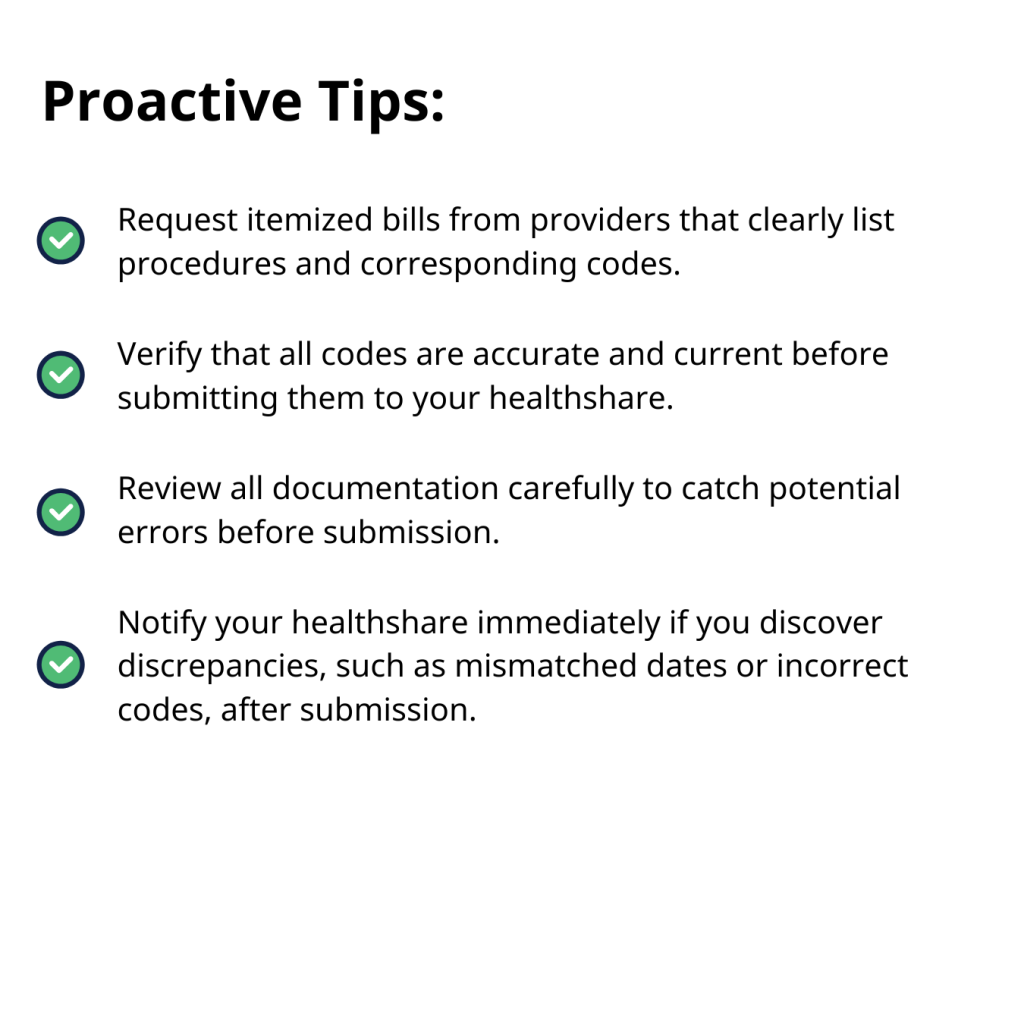
Incorrect or Incomplete Coding
Medical services are billed using standardized codes (e.g., CPT, ICD, or HCPCS codes). Errors in these codes, such as incorrect or outdated entries, can lead to denial.
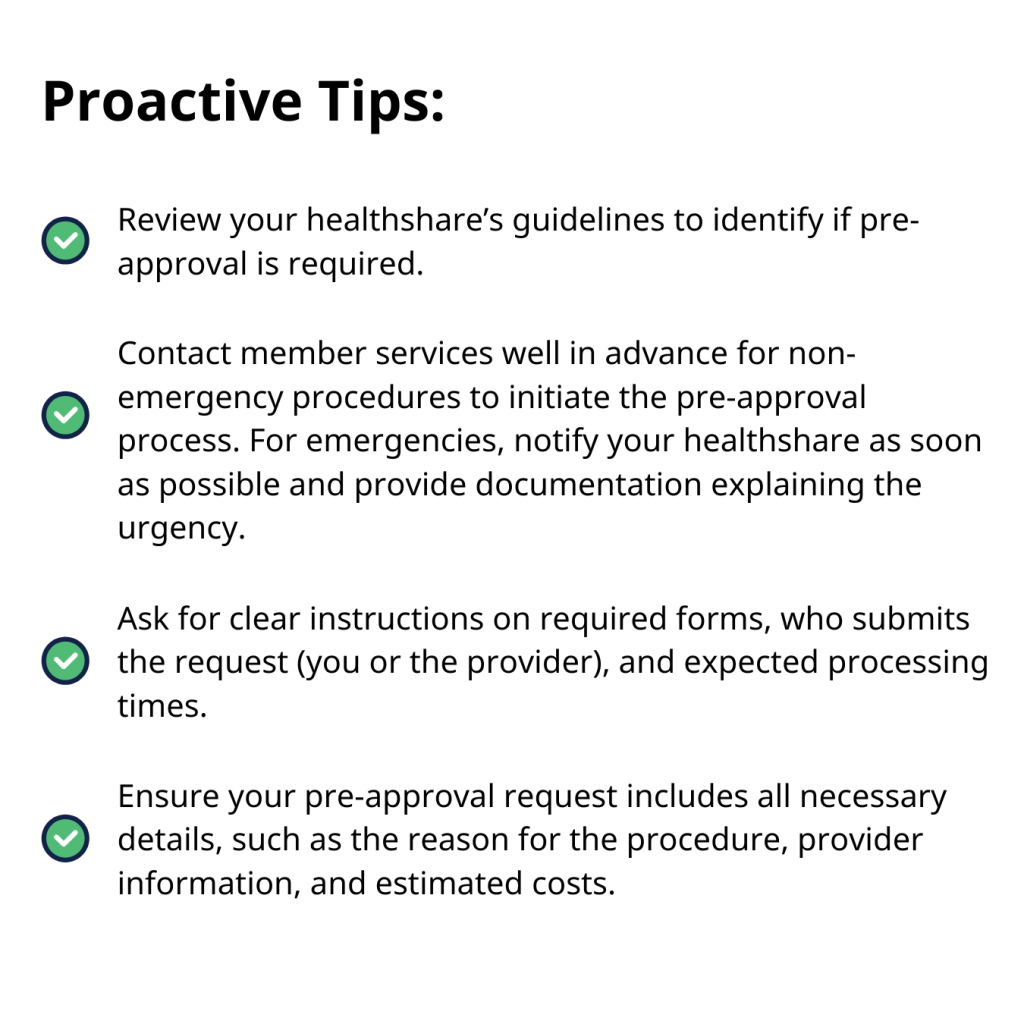
Failure to Obtain Pre-Approval
Certain services, such as surgeries, specialist visits, or expensive diagnostic tests, may require pre-approval from your health share. Failure to obtain approval may result in denial.
Duplicate Submissions
Submitting a request that has already been processed can cause confusion and lead to denial.

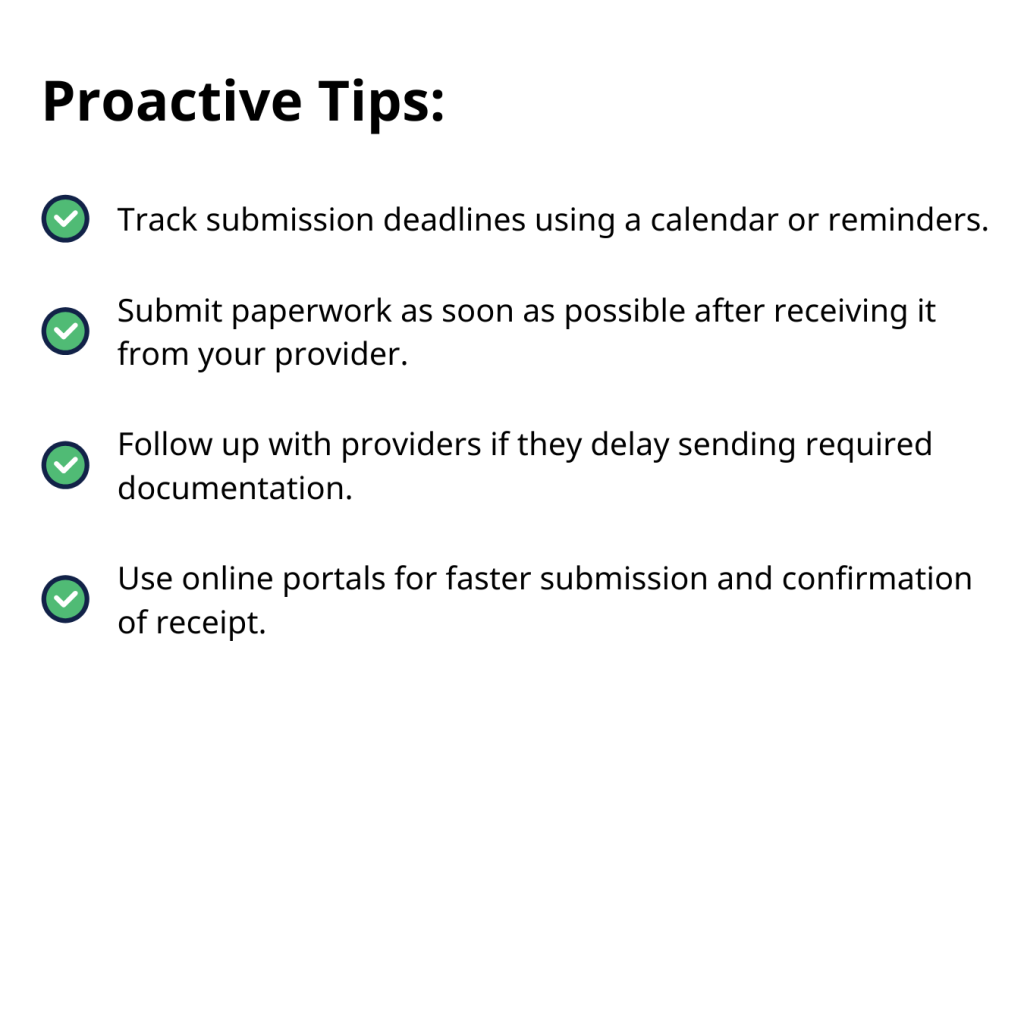
Late Submission
Submitting requests past the health share’s deadline (typically 90–180 days) may result in automatic denial.
Unmet Member Responsibilities
Expenses below your Member Responsibility Amount (MRA) or Initial Unshareable Amount (IUA) are not eligible for sharing and must be met before sharing begins. Additionally, any co-share obligations and monthly contributions must be fulfilled to prevent denials.

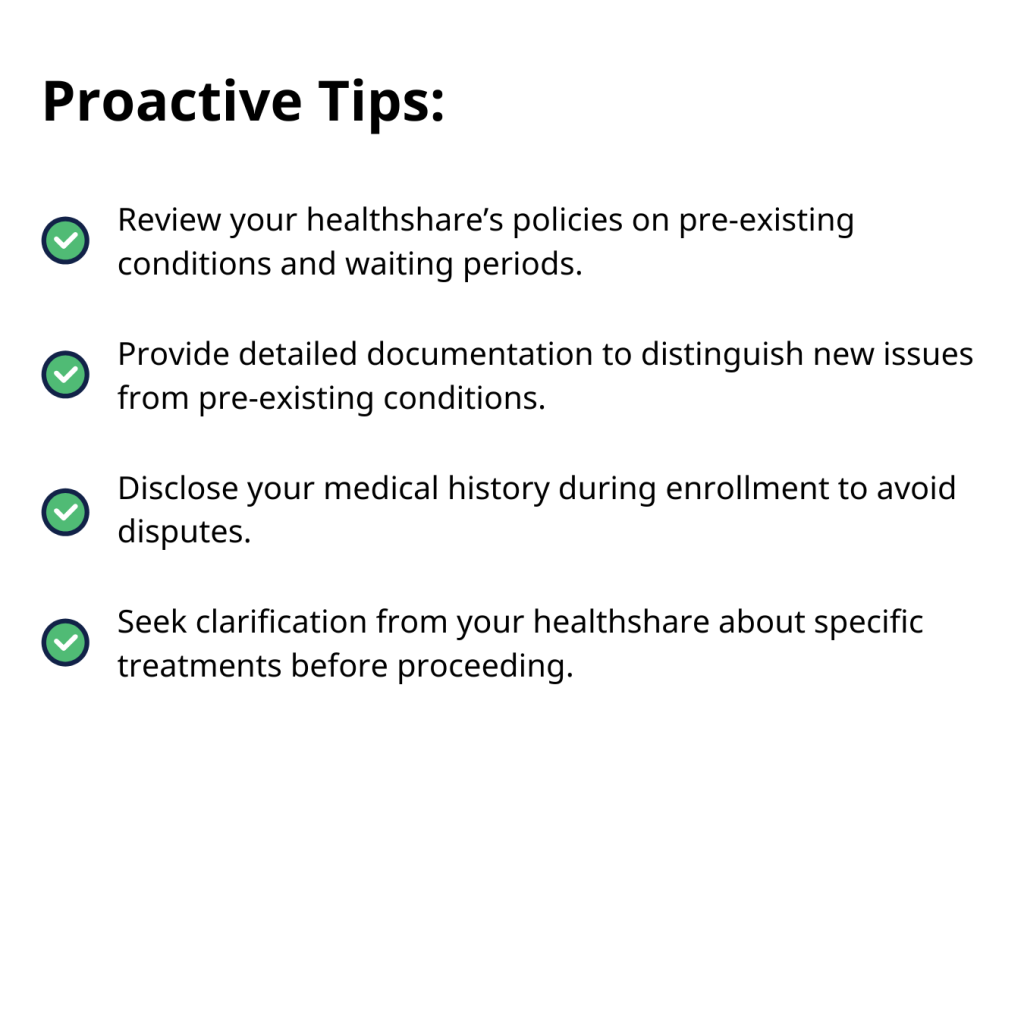
Pre-Existing Conditions
Expenses for conditions diagnosed or treated prior to the start of membership, or during applicable waiting periods, may not be eligible for sharing and could result in denial.
Exceeding Sharing Limits
Certain benefits, like maternity care or prescriptions, might come with specific limitations or caps. Additionally, some health shares set annual or lifetime limits on sharing. Exceeding these amounts may result in a denial of sharing requests.

Non-Eligible Services
Denials can occur when a service falls outside the specific sharing guidelines of a health share. These guidelines, which vary by organization, typically outline what is and isn’t eligible for sharing.
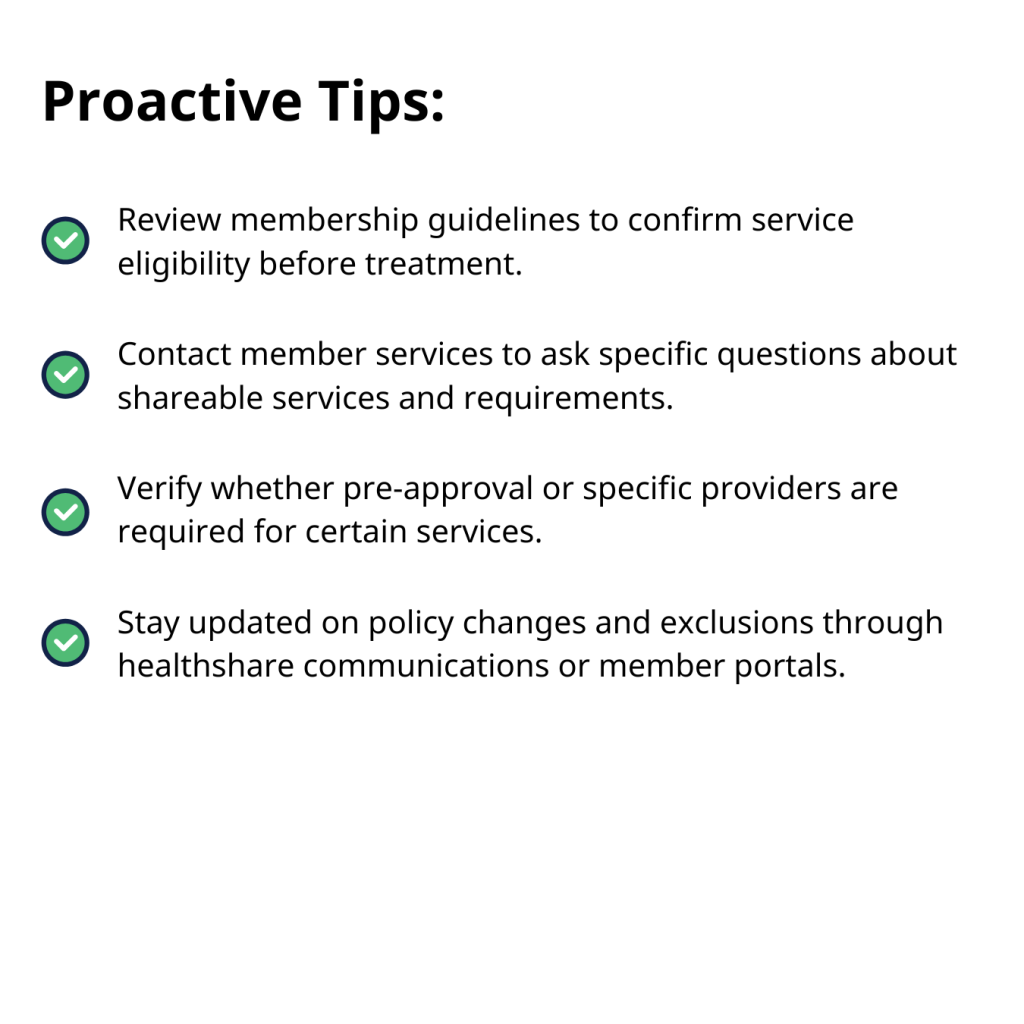
Managing healthcare expenses through a health share doesn’t have to be overwhelming. By staying organized, understanding your program’s guidelines, and communicating proactively, you can navigate the process with greater ease. If you encounter challenges, don’t hesitate to ask questions or seek assistance—your efforts can make a meaningful difference in achieving a smoother experience.